Key Takeaways
Safer allergy label reading is less about memorising every ingredient and more about following the same careful routine each time.
- Check the ingredient list and any “Contains” statement.
- Learn the less obvious names used for major allergens.
- Treat “may contain” wording as a meaningful warning, not decorative packaging.
- Read every package, even when the product looks familiar.
- Ask the manufacturer or a qualified healthcare professional when the label remains unclear.
1. Know where allergens hide on a package
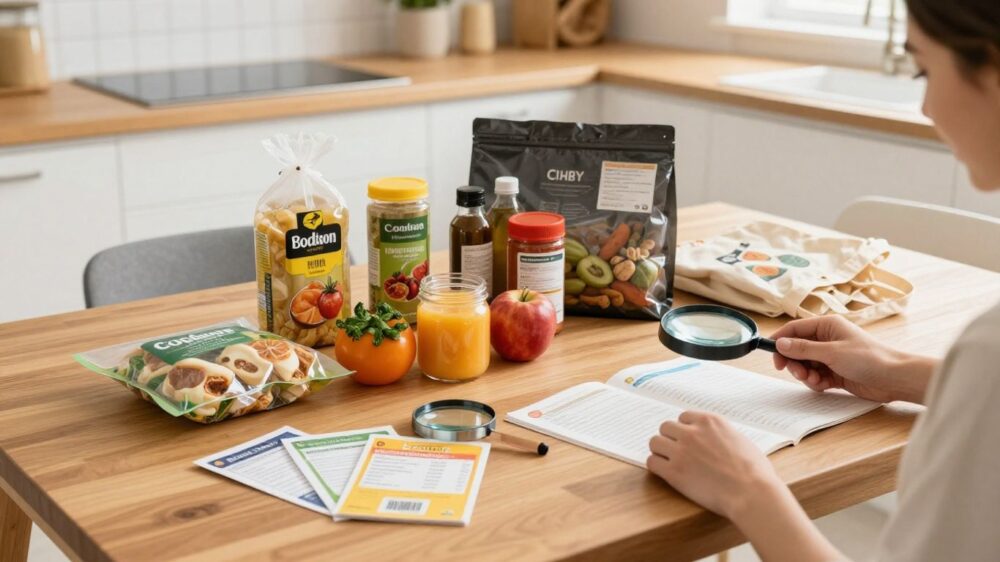
A food package can look perfectly innocent while its ingredient list tells a different story. For families managing allergies, the front of the packet is only the trailer; the back contains the plot twists. Allergy label reading works best when it becomes a calm, repeatable habit rather than a frantic scan under supermarket lighting.
The ingredient list is your first detective mission
Ingredients are listed by weight, from greatest to least, so the list is not arranged according to how risky an ingredient may be. A small amount of an allergen can still matter, even when it appears near the end. The reader’s job is to examine the entire list, not just the first few familiar words.
Technical terms can make this feel like detective work with a particularly fussy dictionary. If an ingredient is unfamiliar and the product is intended for someone with a serious allergy, the safest move is to pause and check it rather than guess.
The “contains” statement tells you what matters most
Many packaged foods include a separate “Contains” statement after the ingredient list. It may identify major allergens in plain language, such as milk, wheat, or soy, and can provide a useful second check. It does not replace the ingredient list, though, because the two parts answer slightly different questions and labelling formats can vary.
A reader can first scan the statement for known allergens, then work through the full list. That two-pass approach is quicker than trying to decode every word at once, while still leaving room for less obvious forms of an allergen.
Learn the names allergens use when they wear disguises
An allergen may appear under a technical or ingredient-specific name rather than the everyday word a shopper expects. Milk, for example, can turn up in ingredients associated with milk proteins; egg may appear in a functional ingredient rather than a breakfast-shaped one. A personal reference list can help, especially when a family cooks with the same packaged staples regularly.
The list should be treated as a prompt for checking, not as permission to make assumptions. Ingredient names, formulations, and regulations can change, and a word that looks familiar may still need confirmation from the label or manufacturer.
Why “natural flavors” and other vague terms deserve a closer look
Terms such as “natural flavors” can describe a category rather than revealing every detail a reader wants to know. They are not automatically unsafe, but they can make an ingredient list harder to interpret. The same goes for colourings, spice blends, flavourings, and compound ingredients.
When a broad term sits beside a known allergy concern, the sensible response is a closer check, not a dramatic leap to either “safe” or “dangerous”. If the package does not provide enough clarity, the product can stay on the shelf until reliable information is available.
2. Decode the major US food allergens
US packaged-food labels identify nine major food allergens: milk, egg, peanut, tree nuts, wheat, soy, fish, crustacean shellfish, and sesame. That list is useful, but it is not a complete catalogue of every food that can cause a reaction. It is also easy to remember the obvious examples while missing a less familiar form hiding in a sauce, seasoning, or baked item.
The nine allergens required on most US labels
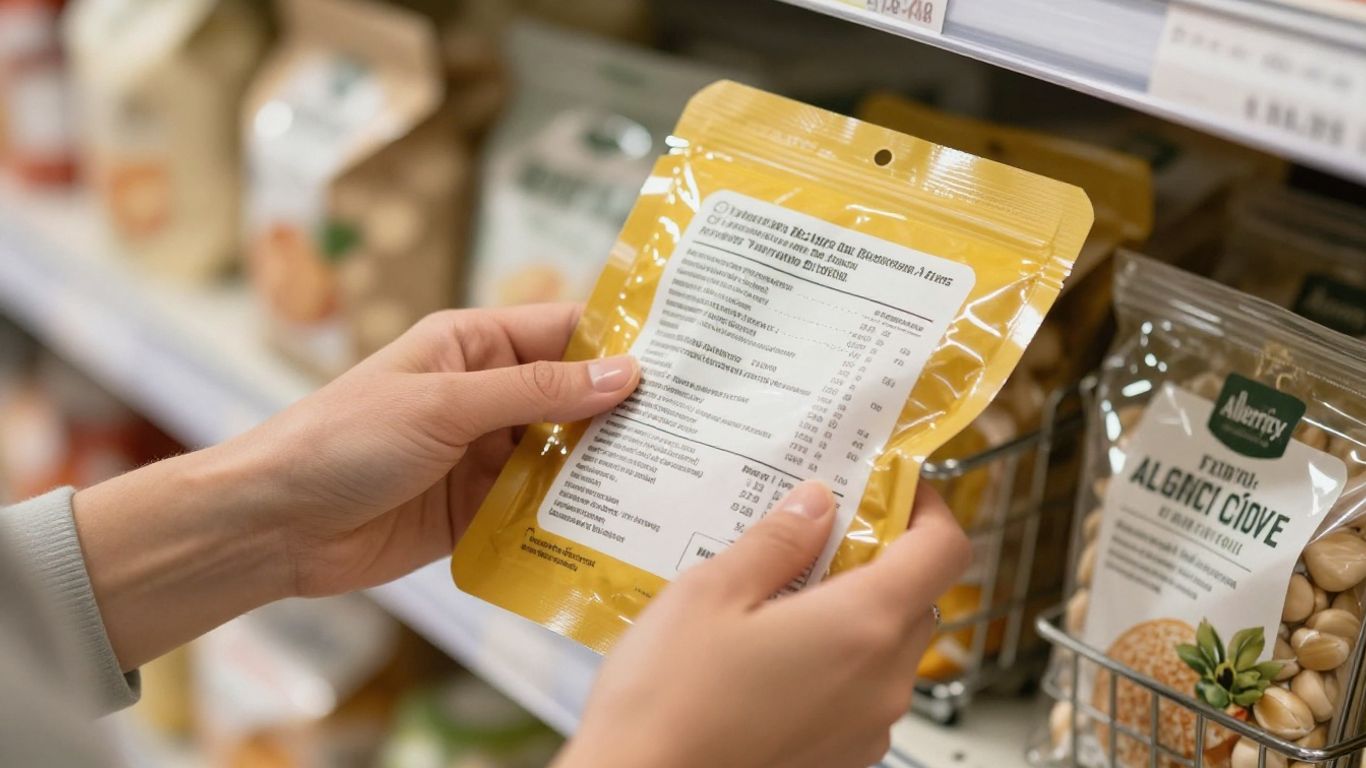
The major-allergen list gives shoppers a practical starting point. Milk, egg, wheat, soy, peanut, tree nuts, fish, crustacean shellfish, and sesame may be named in an ingredient list or a “Contains” statement when present in a packaged food covered by US labelling rules.
Specific names matter. Tree nuts and fish are not simply one interchangeable category, so labels may identify the particular nut or fish involved. A reader should compare the wording with the allergy plan used by the household rather than relying on a broad mental shortcut.
Milk, egg, wheat, and soy in unexpected ingredients
These ingredients appear far beyond cartons of milk, eggs in a dozen, bread, and tofu. They can turn up in biscuits, sauces, confectionery, coatings, dressings, instant meals, and baked goods. A product’s flavour or appearance offers very little protection from surprise ingredients.
A helpful way to read is to ask what role an ingredient might play. Milk-derived ingredients can add creaminess, egg can bind or emulsify, wheat can provide structure, and soy can appear in a range of processed foods. The function does not prove presence, but it explains why a careful scan is worthwhile.
Peanut and tree nuts beyond the obvious snack aisle
Peanut and tree nuts can appear in sweets, cereals, sauces, bakery items, plant-based products, and foods with a nutty flavour or texture. A product that is not sold in the snack aisle is not automatically free from nut ingredients or manufacturing warnings.
Tree nuts also need more specific attention than the phrase “nuts” suggests. Almond, cashew, hazelnut, walnut, pecan, pistachio, and other named nuts are not one single ingredient. The shopper should check the exact wording relevant to the person’s allergy.
Fish, shellfish, sesame, and their less familiar forms
Fish, crustacean shellfish, and sesame can be easy to overlook when a food is not obviously seafood- or seed-based. They may feature in sauces, seasonings, marinades, dressings, spreads, or prepared foods. Crustacean shellfish includes foods such as crab, prawns, and lobster; other shellfish categories may be handled differently under US labelling rules.
Sesame deserves particular attention because it is now included among the nine major allergens required on most US labels. A careful reader still needs to consider the product’s origin and labelling format, especially when the package is imported or sold outside the usual packaged-food system.
3. Treat “may contain” language with care
Advisory wording can be short, easy to skim past, and surprisingly consequential. “May contain” does not describe an intentional ingredient in the same way the ingredient list does, but it can signal a possible route for cross-contact. Because the wording is voluntary, its absence should not be treated as a universal guarantee.
What “may contain” and “made in a facility” actually mean
“May contain” generally warns that an allergen could have entered the food unintentionally during growing, processing, packing, or handling. “Made in a facility that also processes” another allergen gives context about the site, but it does not describe the exact likelihood or amount of contact.
These statements are deliberately cautious. They cannot tell a shopper precisely when contact happened or how much material might be present, so a household’s established allergy-management plan should guide the decision.
Why advisory statements are voluntary
Unlike required ingredient declarations for major allergens, precautionary statements are not a single compulsory formula used on every package. Manufacturers choose whether and how to use them, which means different products can communicate similar concerns in different words.
That unevenness makes the label a source of information, not a certificate of safety. A product without an advisory statement may still deserve questions when the ingredient list, factory information, or packaging history raises doubts.
Cross-contact versus intentional ingredients
Intentional ingredients are put into the recipe on purpose and should appear in the ingredient list. Cross-contact happens when an allergen is transferred unintentionally through shared equipment, facilities, storage, or handling. The distinction matters because it explains why a product can list no peanut ingredient yet carry a peanut advisory.
The package cannot always reveal the exact controls used at a facility. For a household that needs a high level of certainty, a vague warning is a reason to follow its established avoidance plan rather than conduct a tiny experiment with dinner.
When a tiny phrase should send a product back to the shelf
A small advisory line can deserve more attention than a large front-of-pack claim. If the wording names an allergen relevant to the household, the product should not be chosen casually. The same applies when the statement is smudged, incomplete, contradictory, or impossible to interpret.
There is no prize for winning an argument with a packet of biscuits. When the information is unclear, choosing a clearly labelled alternative is often the simpler shopping decision, followed by a manufacturer enquiry if the product is important to the family.
4. Read labels like they are constantly changing
A familiar product is not a permanent contract. Recipes can change, suppliers can change, packaging can be reused across varieties, and a new warning can appear after years of routine purchases. Allergy label reading therefore has one slightly annoying rule: familiarity is helpful, but it is never proof.
Why a familiar product can suddenly become unsafe
A shopper may remember the old label perfectly and still be looking at a new formula. Changes can affect the ingredient list, allergen declaration, advisory wording, or even the size and flavour of the product. Packaging may look almost identical while a small line near the ingredients has changed.
This is why a product that was safe for one shop cannot be assumed safe for the next. The package in hand is the relevant evidence, not the memory of the package in the pantry.
Checking every package instead of trusting memory
Reading every time sounds repetitive because it is repetitive. That is also why it works: the routine removes the need to remember which brand, size, season, or version was checked last month. A quick pause at the shelf is less troublesome than discovering the wrong packet after the groceries are unpacked.
The habit becomes easier when the shopper uses the same order: check the product identity, find the ingredient list, look for the “Contains” statement, scan advisory wording, and confirm the date or version when relevant. The label in hand wins over a remembered label.
Comparing formulas across sizes, flavors, and varieties
A family-sized bag, a multipack, a seasonal version, and a single-serve packet may not share an identical recipe. Neither must a plain flavour match a spicy, filled, coated, or limited-edition one. Similar branding is not a promise of identical ingredients.
When comparing products, the useful comparison is line by line. Differences in sauces, coatings, fillings, and flavour blends often explain why two packets from the same range need separate checks.
Using manufacturer websites and customer service wisely
A manufacturer website can help locate current ingredient information, but a web page may lag behind a package change or describe a range rather than one exact variety. The physical label should remain central. Customer service can be useful when the question is specific and the response clearly relates to the exact product and market.
If an answer is vague, outdated, or refers to a different size or country, the mystery is not solved. The shopper can record the product details, ask a precise follow-up, and choose another food in the meantime.
5. Build a faster, safer label-reading routine
Careful reading does not have to turn a short shop into an expedition. A consistent sequence makes the process faster because the shopper stops reinventing it at every shelf. The goal is not speed for its own sake; it is a routine that remains reliable when the shop is noisy, crowded, or accompanied by a child requesting six types of cereal.
Scan the package in the right order
Starting with the front of the pack can create false reassurance, especially when claims such as “natural” or “free-from” draw the eye. The ingredient list and allergen information deserve the main attention, with advisory wording checked before the product enters the trolley.
A compact sequence can keep the search focused:
- Confirm the exact product, flavour, and size.
- Read the full ingredient list.
- Check the “Contains” statement and advisory wording.
- Compare the information with the household’s allergen list.
Once the routine becomes familiar, it feels less like decoding a legal document and more like checking the oven temperature before baking. It still needs doing, but it no longer requires a fresh burst of courage each time.
Make a personal allergen word list
A household list can include the allergens of concern, technical names already confirmed by a qualified source, and questions that still need answering. It can live in a phone, recipe folder, or shopping note. The list should be updated when the household receives new, reliable information.
It should not become an ever-growing collection of internet guesses. Unknown terms belong in the “check this” column until they are clarified, not in the “probably fine” column simply because they sound harmless.
Avoid shopping while distracted, rushed, or dramatically hungry
Hunger is a talented negotiator. It can make a shopper overlook tiny print, accept a familiar-looking packet, or decide that checking one more label is an unreasonable burden. Distraction has much the same effect, particularly when a queue, a phone, or a tired child is involved.
A slower shop at the beginning can prevent a more stressful one later. If concentration has disappeared completely, the practical choice may be a clearly understood staple rather than an exciting product with an unreadable ingredient list.
Teach children and caregivers the same process
Children and caregivers need a shared method, not just a list of foods to avoid. They can learn where the ingredient list sits, why packaging claims are not enough, and why a favourite snack is checked again after a packaging change. The explanation can stay age-appropriate without turning the supermarket into a lecture theatre.
Consistency matters when several people shop, cook, pack lunches, or supervise snacks. If one person checks only the front label while another checks the full package, the household is operating with two different rulebooks.
6. Handle confusing labels and real-world edge cases
Not every food arrives in a neat packet with a generous ingredient panel. Imported goods, bakery items, deli salads, and bulk foods can require extra questions. The same calm principles still apply: identify what is known, notice what is missing, and do not fill gaps with optimism.
Imported foods and unfamiliar labeling rules
An imported package may use different allergen terminology, languages, formatting, or legal requirements. A familiar ingredient word may not translate neatly, and a label designed for another market may not provide the same information a shopper expects from a US product.
When the wording cannot be confidently understood, a translated ingredient list is only useful if it is accurate and complete. The shopper can seek information from the importer or manufacturer, while remembering that an attractive package is not a substitute for clear allergen information.
Bakery, deli, and bulk-bin products
Loose foods often have less standardised labelling and may share equipment, display cases, utensils, or storage areas. A bakery item can contain an allergen in the recipe, while a deli product may involve prepared ingredients that are not obvious from its name. Bulk bins add another layer of uncertainty because scoops and containers can be shared.
Staff may be able to provide an ingredient list or explain handling practices, but a confident tone is not the same as complete information. If the answer remains uncertain, the product is not a good candidate for guessing.
“Free-from” claims that do not tell the whole story
A “free-from” statement can be useful, but it may refer to one allergen, one recipe, or one production claim rather than every concern a household has. It does not necessarily explain cross-contact, other allergens, or whether the statement applies to the exact variety being held.
The claim should be read alongside the ingredient list and advisory wording. Front-of-pack language starts the check; it does not finish it.
When to ask a healthcare professional or the manufacturer
A qualified healthcare professional can help a family develop advice suited to its medical circumstances, while the manufacturer can answer questions about a particular product or process. Those are different roles, and neither should be replaced by a confident guess from a stranger in the supermarket aisle.
A useful enquiry names the exact product, flavour, size, package date or code when relevant, and the allergen being queried. If the response is incomplete or the label remains ambiguous, choosing a clearly understood alternative is a sensible way to keep the meal pleasantly boring—and the label reading pleasantly uneventful.